Yes, you can photograph in a public park. If you are standing somewhere visitors are welcome and you are not blocking anyone or entering a closed area, taking pictures of the park, its paths and the people using it is generally allowed. The rules that catch beginners out are about paid shoots, tripods, drones and getting too close to wildlife, not about pointing a camera at a pond.
A relaxed photo walk needs about an hour and works with any camera. The skill that matters most is noticing where you are standing relative to other people.
This is general information, not legal advice. Park rules change, so check the managing agency for the specific park before you go.
Table of Contents
- What You Need
- Step-by-Step
- Check the Park Rules Before You Go
- Choose a Safe, Public Area to Explore
- Ask Permission When Needed
- Photograph Without Harassing People or Wildlife
- Pack Up and Leave the Park Responsibly
- Which Authority Sets the Rules at Your Park
- Common Mistakes
- Frequently Asked Questions
- Can I take pictures in a public park?
- Do I need a permit to take photos in a national park?
- Can I take pictures of people at a park?
- Can street photography be done in a park?
- Can a park ranger make me delete my photos?
- Do I need a model release to sell photos taken in a park?
- Start With One Rule
What You Need
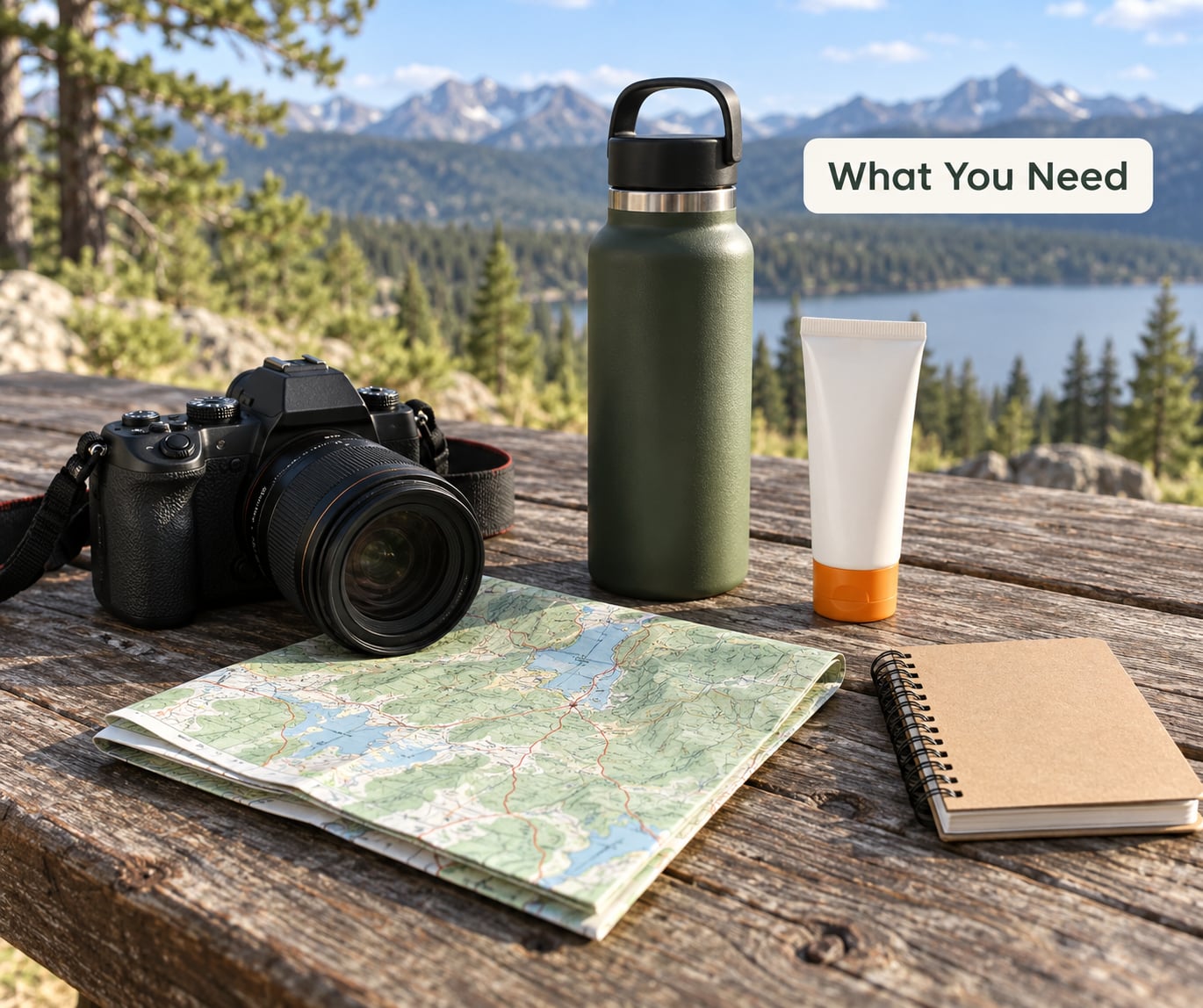
Start with the park itself. Search the park name plus its managing agency, and read the visitor page before you leave the house. Hours, gate closures, permit rules and seasonal restrictions all live there, and construction closures are often posted on a separate page.
A phone is genuinely enough. Most park photo walks are about finding light and framing rather than about gear, and the difference between a phone shot and a dedicated camera shot is smaller than most beginners expect.
Pack water and sun protection next. There is rarely anywhere to refill between the car and the far end of a path, and I have made the mistake of carrying one camera and no water more than once.
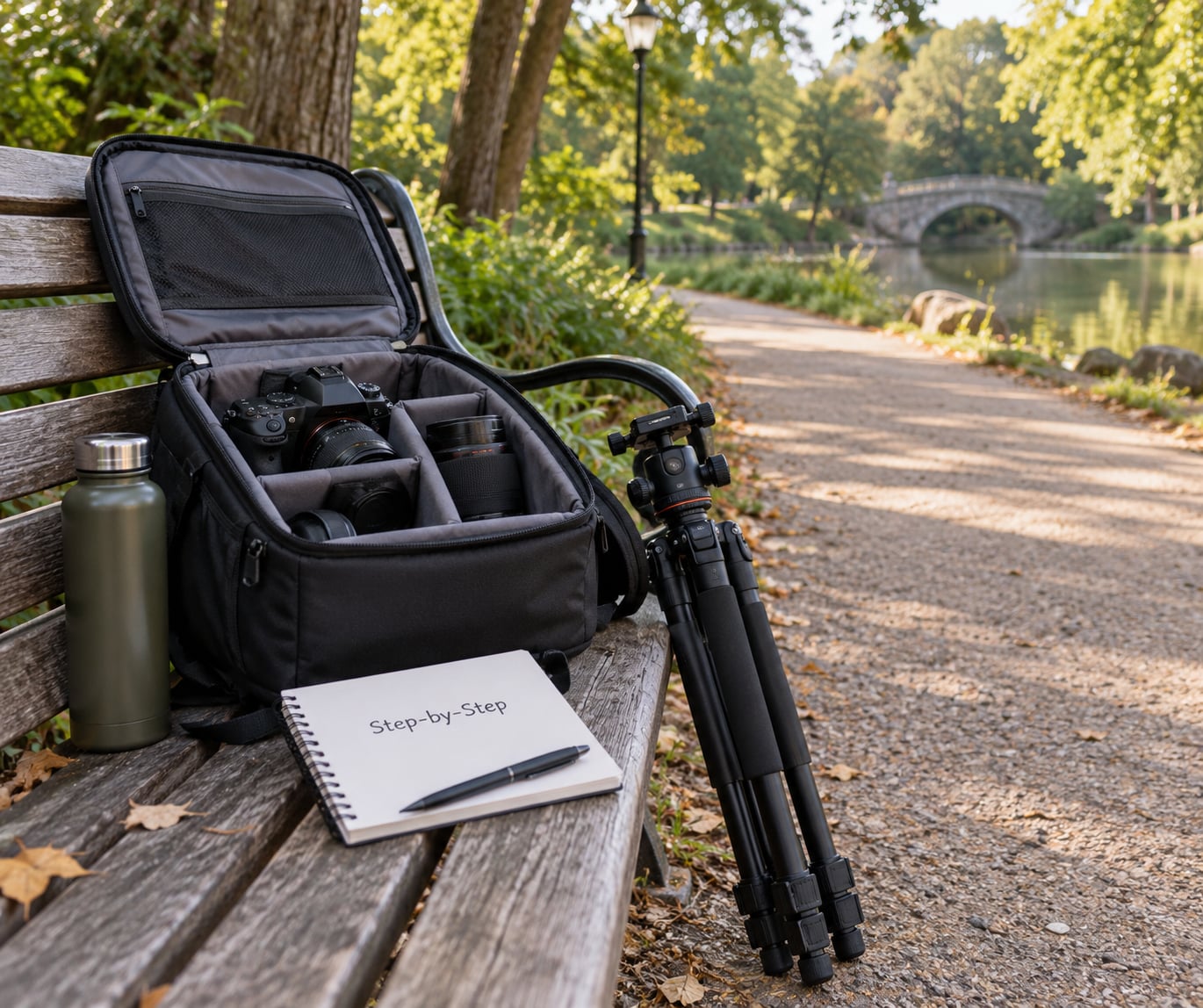
Decide on a tripod before you go. Some parks restrict tripods or require a permit for them, so check the rules page first. On busy paths a tripod is also the fastest way to annoy people who are trying to walk past.
One more thing worth carrying: a small notebook. Write down the time of day and location when you get a frame you like, because you will not remember later.
Step-by-Step
Check the Park Rules Before You Go
Look for five things on the park’s page or signage: opening hours, whether a permit is required, tripod or lighting restrictions, drone rules, and any closed areas. Parks run by a city, a county, a state agency or a federal agency each publish their own version.
City and county parks are often the strictest about paid shoots, because that is where photographers cluster around popular entrances. National and federal parks have their own set of rules, and the January 2025 EXPLORE Act (P.L. 118-234) removed permits and fees for groups of five or fewer on federal lands, with a de minimis use authorization available for groups of six to eight.
If the rules page is vague, call the office listed on it and ask one direct question: does this park require a permit to photograph, and for what activities. Rangers and office staff answer that question far more usefully than they will interpret a rule for you.
Ask about current conditions too. A habitat restoration area or a festival closure may not appear anywhere except on a sign at the gate.
Choose a Safe, Public Area to Explore
Work where people expect photographers to be: open paths, overlooks, lawns around playgrounds, garden beds, ponds and paved trails. These are the areas people came to be in, so a camera in that direction rarely feels intrusive.
Give yourself light. Overhangs and late afternoon sun from the side will do more for a frame than any filter. Shade under dense trees in the middle of the day is the hardest light to work with, and it is where most park photos end up flat.
Steer clear of anything fenced, signed or planted. Off-trail areas, restoration plots, nesting grounds and utility infrastructure are not part of your public invitation, and being there is trespass whether or not your camera is out.
Also watch your own footing. Wet boardwalks, roots and sloped grass banks near ponds cause more accidents than any wildlife will.
Ask Permission When Needed
Ordinary personal photography does not need anyone’s permission. A paid session usually does. Practitioners describe the practical line clearly: for still photos, a permit tends to be needed when you are working in a restricted part of the park, bringing props or set pieces, or causing disruption.
Treat these as the permit triggers worth checking on:
- A client session, mini session or shoot you are being paid for
- Props, backdrops, furniture or lighting stands set up in a public area
- Tripods, light stands, drones or large equipment in a busy location
- Filming or photographing a paid event such as a wedding or a running race
- Anything inside a managed building, such as a visitor center, greenhouse or rental pavilion
- Shooting in a closed area, or where a temporary event sign says no photography
Many parks also ask for proof of liability insurance for a commercial permit, and some charge more if models, animals or vehicles are involved. A rental pavilion or a formal garden may be first-come, first-served with no notice at all, so ask before you unload.
A model release is a separate matter from a park permit. It is a signed permission from the person in your frame to use the image commercially, and a property release covers trademarked or private buildings. For editorial and news use, releases are usually not required.
Photograph Without Harassing People or Wildlife
Candid images of people in public are generally fine. What changes the answer is distance and context. Someone walking their dog, waiting for a friend or reading a book has no expectation that a stranger will be standing close enough to fill the frame.
Keep a working distance of roughly ten meters for a single relaxed frame, and much more with a long lens. Use a zoom rather than your legs. Stepping closer to fill the frame is the thing people notice and remember.
Skip areas where someone is undressed, changing, feeding a baby, using a washroom or visibly unwell, and skip anyone in an argument or a fight. Photographs taken during a genuine emergency rarely help anyone and can create real harm.
Children deserve an extra beat. Parents on parenting forums describe having a stranger photograph their children as inherently unsettling, and it is worth respecting that even where the law says nothing. Ask first, or leave them out.
For wildlife, treat distance as a rule rather than a suggestion. Stay on the trail, keep a telephoto between you and anything wild, and never feed an animal to get a better frame. Feeding animals causes injury and gets animals removed. If an animal changes its behaviour because of you, you are too close.
Pack Up and Leave the Park Responsibly
Watch the closing time rather than assuming it. Gates lock, and being inside a locked park at night is a genuine problem regardless of why you stayed.
Carry out everything you carried in, including lens caps, wrappers and tissues. If you move a rock or a log to frame a shot, put it back.
Leave flowers, bulbs and fungi where they grow, even when a close-up would be better with one picked up. The same goes for driftwood and anything in a nest area.
Do not block paths to get an angle. Walking backwards across a walkway with a camera is the fastest route to a complaint and to a bad frame at the same time.
Which Authority Sets the Rules at Your Park
Most confusion comes from assuming every park follows the same rulebook. They do not, and the difference between a city park and a national park can be the difference between a free afternoon and a permit application.
| Park type | Who sets the rules | Permit usually needed for | Where to check |
|---|---|---|---|
| City park | City parks and recreation department | Paid sessions, props, commercial use | City website, park page, permit office |
| County park | County parks department | Paid sessions, equipment in public areas | County website, main office |
| State park | State park agency | Commercial shoots, models, weddings | State agency site, ranger station |
| National park | National Park Service | Groups of 6 or more on federal land, commercial filming | NPS site, individual park page |
| National forest | US Forest Service | Commercial filming permits by region | Forest service ranger district |
Federal land rules are the ones most published advice still gets wrong. The EXPLORE Act, which took effect in January 2025, dropped the old commercial versus noncommercial distinction for federal lands, removed permits and fees for groups of five or fewer, and created a lighter de minimis use authorization for groups of six to eight. State, city and county parks were not changed by it.
Common Mistakes
Assuming every park allows unrestricted photography. The signs at the gate exist because something different applies there.
Photographing in a restricted area. A closed trail or a nesting closure is off limits no matter how good the light is.
Setting up a tripod in a busy walkway. It is legal in many parks and still socially wrong in most of them.
Getting close to wildlife for a better frame, or worse, feeding it. Wildlife rules are enforced harder than most people expect.
Leaving gear behind to claim a good spot while you walk. Everything you own disappears in a couple of minutes.
Photographing children without asking. It is not usually illegal, and it is regularly the reason a parent complains.
Backing into a path while framing a shot. Watch the frame behind you, not just the one in the viewfinder.
Deleting images on request from anyone who asks. A photographer who is merely annoyed cannot take your files. If police want your images, ask what the legal basis is before you hand anything over.
Treating a ranger or a security guard as the final authority on every question. Staff enforce house rules, which are real, but staff are not giving you legal advice in the moment.
Frequently Asked Questions
Can I take pictures in a public park?
Yes. In most parks, personal photography of the grounds and of other visitors is allowed without permission, as long as you stay in areas open to the public, do not block anyone, and follow posted signs. Rules change by park, so check the managing agency page before you go, especially for tripods, drones, props or paid sessions.
Do I need a permit to take photos in a national park?
For most people, no. The EXPLORE Act, effective January 2025, removed permits and fees on federal lands for groups of five or fewer and added a de minimis use authorization for groups of six to eight. Permits still apply to commercial filming, larger groups, and some specific activities. Individual park pages can add their own conditions.
Can I take pictures of people at a park?
Generally yes, because people in a public park usually have no reasonable expectation of privacy. The exceptions are places and situations where someone does expect privacy, such as changing areas or nursing spaces, and anything involving a child, an emergency or a private activity. Keep a respectful distance and use a zoom rather than moving closer.
Can street photography be done in a park?
Yes. Parks are just another public space, and the same rules apply: shoot freely in open areas, keep out of closed or restricted zones, and avoid anyone who clearly expects privacy. Be aware that city parks near popular entrances are where congestion complaints come up most often, so keep walkways clear and avoid blocking the entrance.
Can a park ranger make me delete my photos?
A ranger or park staff can require you to leave, remove gear, or stop an activity that breaks a posted rule. Deleting your images is a different matter. You are not obliged to hand over or erase your files because someone asks. If police want to see or take your camera, stay calm, ask what the legal basis is, and do not delete anything.
Do I need a model release to sell photos taken in a park?
For editorial, news or personal use, no. For advertising, stock licensing used as marketing, or commercial campaigns, you usually want a model release for identifiable people and a property release for trademarked buildings or private interiors. You own the copyright in your images by default, so check what the stock platform requires before you submit.
Start With One Rule
Pick a park, find the managing agency, and read its photography page before anything else. Everything else in this guide follows from that, and it takes about five minutes.