If you only take one thing from this, take this: a UV filter is a protective filter, not a light filter. On any modern digital camera it blocks very little ultraviolet light, so its real value is standing between your front element and sand, salt spray, dust and fingerprints. Everything else depends on your shooting conditions and the quality of the glass.
One note before we go further, because the phrase confuses people every year. A UV filter here means the clear glass disc that screws onto a camera lens. Sunglass shops, water purifiers and blacklight fixtures sell things called UV filters too, and they do completely different jobs.
The confusion is not silly. On the photography forums the same question gets re-asked every month. A new lens arrives and someone on r/fujifilm asks whether it is worth “throwing on a filter to protect the front element,” while a user on r/Cameras asked the identical question at the counter when buying a telephoto zoom and was offered a protection filter with it. Both are reasonable instincts, so here is the honest version.
Table of Contents
- What Is a UV Filter Actually For?
- How Does a UV Filter Work?
- What Does a UV Filter Do to Image Quality?
- UV Filter vs Clear Protective Filter
- When Is a UV Filter Worth Buying?
- How to Choose a UV Filter for Your Camera?
- Frequently Asked Questions
- Do modern digital cameras still need a UV filter?
- Does a UV filter improve image quality?
- Does a UV filter slow down autofocus?
- How do you clean a UV filter?
- Will a UV filter protect my lens if I drop the camera?
- Conclusion: Should You Use a UV Filter?
What Is a UV Filter Actually For?
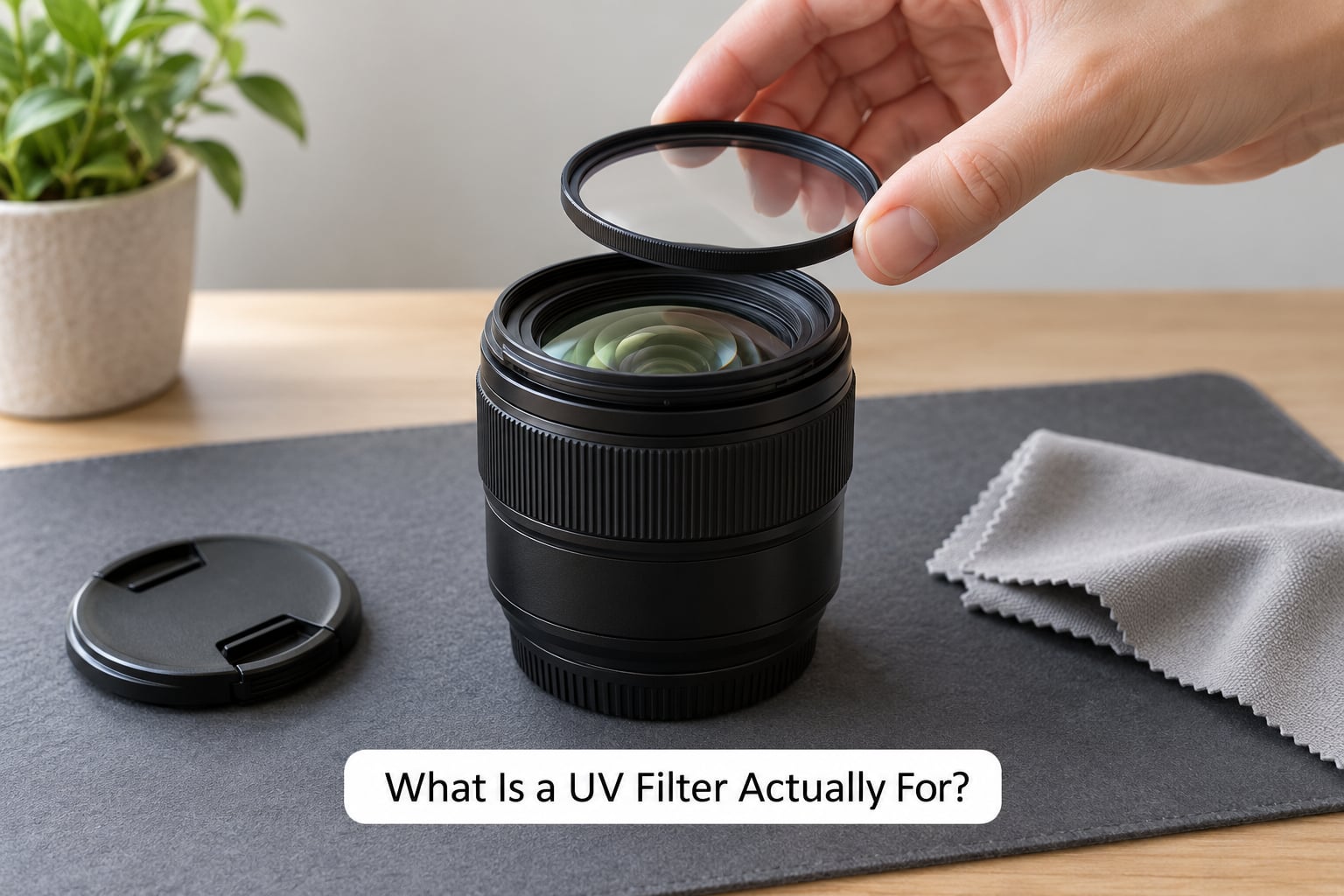
What is a UV filter actually for? Two things: it was built to block ultraviolet light, and today it mainly works as a cheap sacrificial shield over the front element. On a digital body the first job is nearly redundant, because the sensor already sits behind a UV and IR cut filter. The second job is real, cheap to replace, and the reason most working photographers keep one on a lens they use outdoors.
The sacrificial part deserves emphasis. A front element that gets scratched, cracked or hazed is a repair bill that dwarfs the cost of the glass sitting in front of it. A filter takes the same hit and swaps out in a minute. That is the entire economic argument, and it is enough on its own for beach, trail and travel work.
The rest of this guide covers how the thing works, what it costs you optically, when to leave it on, and when to take it off for the shot.
How Does a UV Filter Work?
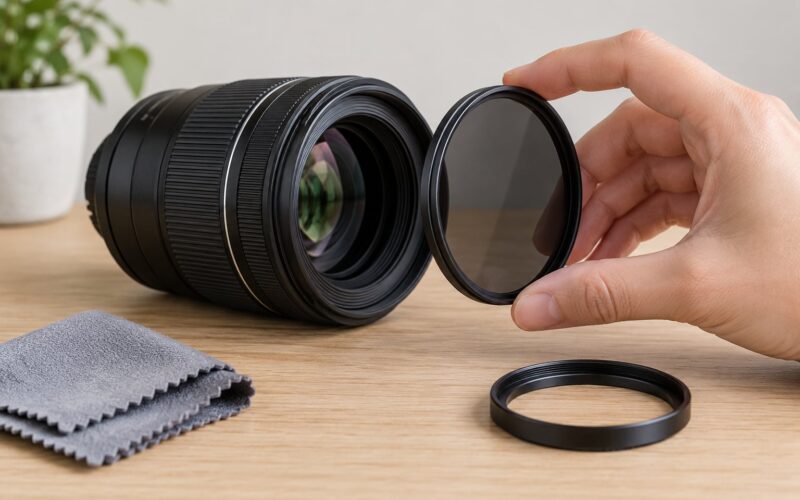
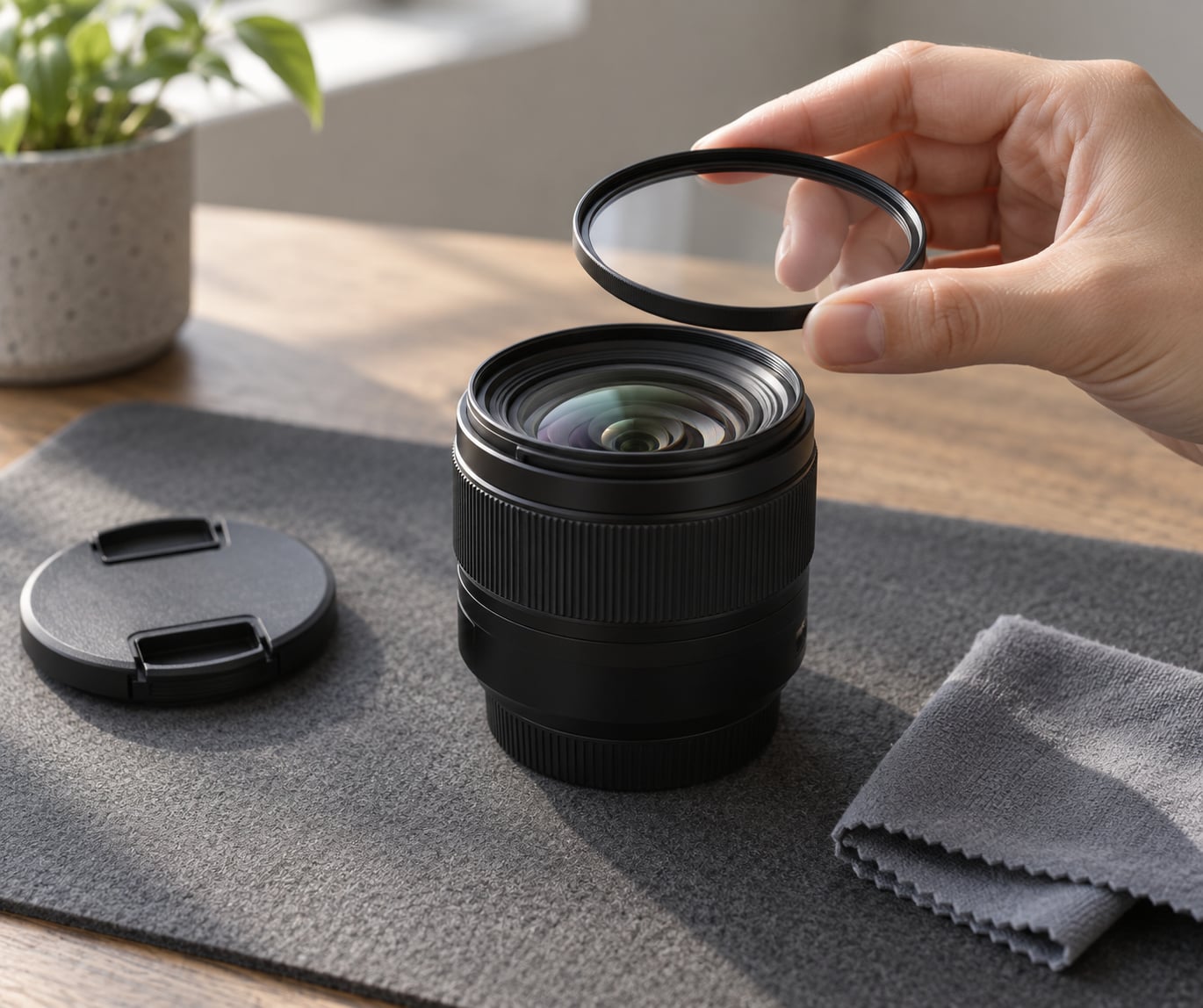
The filter is a flat disc of optical glass, resin or a hybrid of both, with multi-layer anti-reflective coatings on each surface. Light hits it before it reaches your lens glass. The coatings and the material are chosen to reflect or absorb certain wavelengths while passing the rest through as close to untouched as possible.
The ultraviolet spectrum runs roughly 100 to 400 nanometres and splits into three bands, and the split matters more than most buyers realise.
| Band | Range | Why it mattered on film |
|---|---|---|
| UVC | 100-280 nm | Blocked by the ozone layer, barely reaches the ground |
| UVB | 280-315 nm | Burning and skin damage; hazy on distant scenery |
| UVA | 315-400 nm | The band that caused visible blue casts and haze |
Photographers who test these filters, as the regulars on ultravioletphotography.com do, tend to arrive at the same uncomfortable finding: the cheap ones labelled UV filter mostly handle UVA, and leak more of the upper spectrum. Someone there put it plainly, noting that most UV filters are not really very good at blocking UV, especially the upper UV range.
Film made this a real problem. Emulsions were sensitive well into the ultraviolet, so a lens that did not block UVA put a blue cast on sunlit scenes and a milky veil across distant hills. A UV filter fixed that. Users on r/PhotographyAdvice still describe the old landscape case the same way, noting that UV filters are good for film photography because film is sensitive to UV and UV causes excessive haze in distant sunlit scenes.
Digital broke the argument. Bayer sensors are far less sensitive to ultraviolet, and every camera body carries a UV and IR cut filter over the sensor as part of its optical stack. As a photographer on fredmiranda.com put it, UV filters are for film cameras and are totally unnecessary on any modern digital camera, because image sensors already have UV and IR filters. That is the consensus in the discussions, and it is correct for practical purposes.
Two situations still justify one. Shooting film, especially with an older single-coated lens, is the original case and it still holds. A specialty sensor tuned for ultraviolet or infrared work, such as those used for fluorescence or multispectral capture, is the other.
What Does a UV Filter Do to Image Quality?
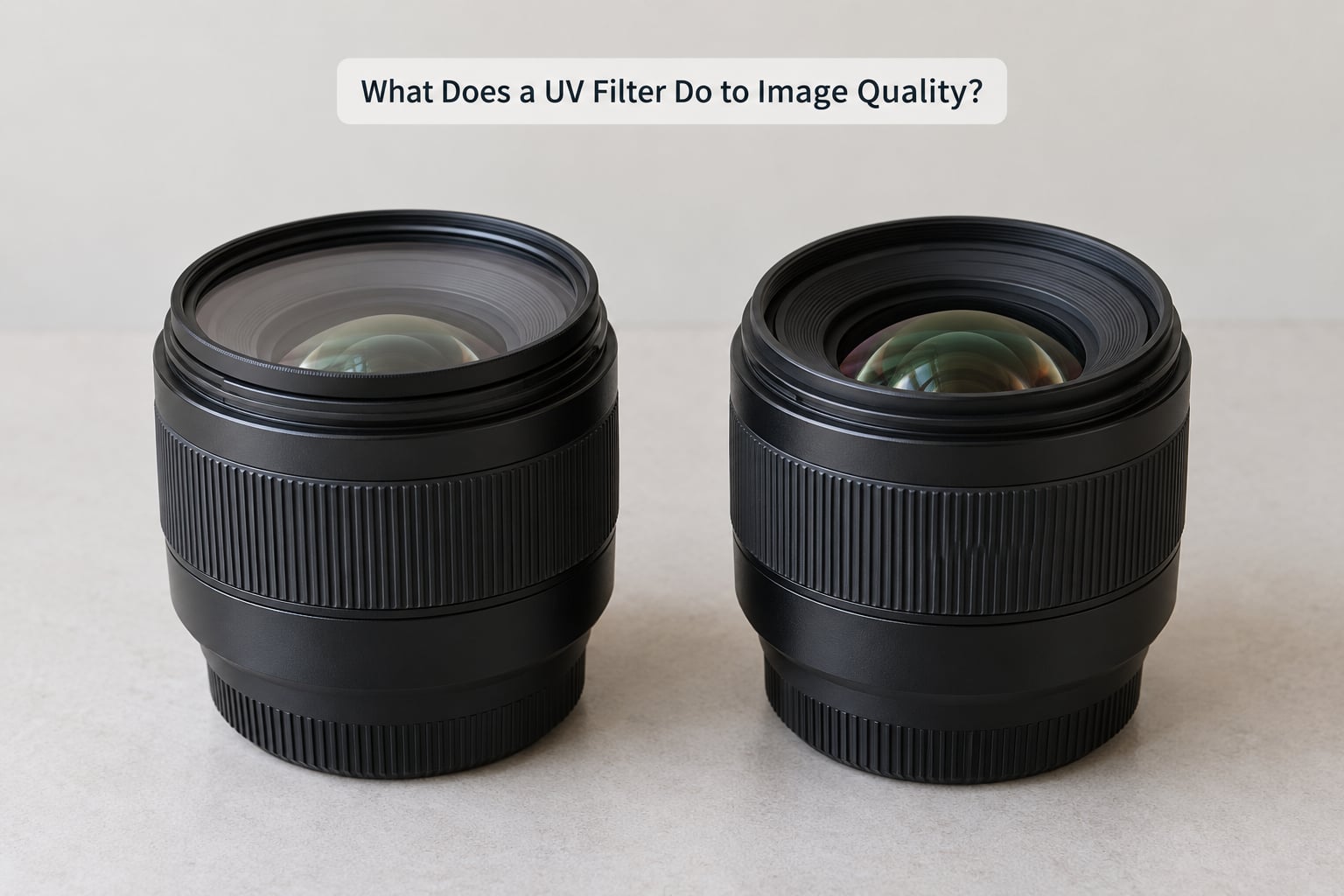
Every piece of glass in the light path adds reflections. A good multi-coated filter keeps those reflections faint, but faint is not the same as absent. The artefacts show up in two distinct ways, and telling them apart tells you whether the filter is really the problem.
Flare is veiling haze across the frame, usually from light hitting the front surface at an angle. The front element of a lens already handles this with its own coatings, and the hood blocks much of it. A filter on the front does not add much here as long as you keep it clean and use a hood.
Ghosting is the sharper problem. Light reflects off the sensor, travels back through the lens, bounces off the rear surface of the filter and lands in the frame again as a coloured blob, usually opposite a bright source. The mechanism is simple: every extra surface is another bounce point, and the rear surface of a filter sits right in the path of that returned light.
Ghosting gets worse at wide apertures and improves as you stop down, because the ghost shrinks with the aperture. That is why a fast prime at f/1.8 shows it and an f/8 landscape shot does not. On dpreview forums the question of whether filters cause visible ghosts has been argued for well over a decade, and the practical consensus there has not changed.
Beyond ghosting, expect a small amount of light loss at every surface, a slight reduction in contrast from veiling reflections, and vignetting that gets uncomfortable when you stack a UV filter with a polariser or ND on a wide-angle lens. Fast telephotos can also look a touch softer with a cheap filter because of surface flatness and added spherical aberration.
The honest summary: on a good multi-coated filter at f/5.6 and above, the difference is small. On a cheap filter, wide open, at night, in a city full of point lights, it is not small at all.
UV Filter vs Clear Protective Filter
A UV filter and a plain clear protective filter usually look identical and cost about the same. The difference is what the marketing claims and, in the good versions, what the coatings do.
| Consideration | UV filter | Clear protective filter |
|---|---|---|
| Optical claim | Blocks UVA wavelengths | None, just clear glass |
| Protection | Same barrier role | Same barrier role |
| Image quality | Can add flare and ghosting | Can add flare and ghosting |
| Useful for | Film, older uncoated glass, UV work | Every digital body in the field |
| Best pick | A well-coated branded one if you want the optical claim | A well-coated branded one for everything else |
The practical difference comes down to this: if you shoot digital with a modern coated lens, the clear protective filter does the same protective job with no optical claim attached. Paying extra for UVA blocking on that setup buys you nothing you can see.
Analogue shooters on r/AnalogCommunity reached the same conclusion from the other direction, advising people to treat them solely as protective filters and keep one on in hostile conditions, especially sea spray. They conceded the ultraviolet argument entirely.
When Is a UV Filter Worth Buying?
It earns its place in three situations, and they all involve the outside world trying to get at your glass.
Abrasive environments. Sand, dust, grit off a track and salt spray are the big three. Salt is the nastiest because it leaves residue that keeps working after the shoot. On the analogue forum, sea spray is the single condition people name most often as a genuine reason to keep the filter on.
Frequent handling and lens changes. If the camera has a child-handling it, lives in a bag with other gear, or gets a filter swapped on and off all day, the extra surface takes the smears. Fingerprints on a flat filter wipe off in seconds. The same smear on a curved front element means a proper clean and a real chance of scratching it.
Value and insurance on an expensive lens. The arithmetic is simple and it is the reason the habit persists. Replacing a filter is trivial. Repairing or replacing a front element is not, and the cost gap is enormous. Even one absorbed scratch pays for years of filters.
Now the cases where a lens hood and careful handling serve you better. In the studio, indoors and in clean air, a filter only adds glass between the light and the sensor. For night work and long exposures with bright point sources, take it off, because that is exactly where ghosting shows. On fast wide angles where you already stack a polariser or ND, skip it and save the vignetting and light loss.
One thing a filter will not do, despite how the sales pitch sounds: it will not save your lens in a real drop. Filter glass is flat and more fragile than a curved front element, so a hard knock usually breaks both. Treat it as insurance against dust, grit and fingerprints, not against falls.
How to Choose a UV Filter for Your Camera?
Match the thread, not the size. Print the diameter marked on the lens barrel, usually something like 58mm or 77mm, and look for a filter with the same number. That number is the thread diameter in millimetres. A filter diameter of 58mm is a different thing entirely, and shops mix the two constantly.
Buy the thinnest filter you can find. The rim size adds weight and, on a wide angle, extra vignetting. Thin-rim filters are easier to stack too.
Prioritise coatings and glass. Multi-layer coatings reduce reflections and make cleaning easier. Flat, low-dispersion optical glass holds up better on fast wide angles. Brand matters here more than anywhere else, because the cheap tier is where optical inconsistency shows up in the corners of your files.
Check it works with your hood. Many hoods fit over a filter thread with the filter attached. A metal rim or a thick filter can stop a plastic hood from seating properly, so buy both from the same range when you can.
Skip the extras. Most kits of filter plus a lens pouch plus a cleaning cloth are mostly packaging. The only accessory worth adding is a proper blower and a microfibre cloth, plus a lens-cleaning fluid if you shoot near water.
Frequently Asked Questions
Do modern digital cameras still need a UV filter?
No, not for light reasons. Digital sensors sit behind a UV and IR cut filter, and camera lenses carry multi-coating that blocks most remaining ultraviolet, so a UV filter adds almost nothing optically on a modern body. Keep one for protection in sand, dust or salt spray, or on film and older uncoated glass.
Does a UV filter improve image quality?
Not on a modern digital camera with a coated lens. In poor conditions it can make images worse by adding flare and ghosting, and it can cost a little contrast, light and corner sharpness. On film or an older uncoated lens it genuinely helps, because the blue cast and haze from ultraviolet light are real problems there.
Does a UV filter slow down autofocus?
It can, slightly, and the effect is rarely noticeable. Most contrast-detect and phase-detect systems focus through a filter without trouble, but a cheap filter with poor coatings and low transmission can hunt more in very dim light. Fast low-light autofocus is the case where taking the filter off is worth testing for yourself.
How do you clean a UV filter?
Breathe on it first, then wipe with a clean microfibre cloth and a drop of lens fluid, always moving outward from the centre in a spiral. Never use a dry tissue, which scratches coatings, and skip the collar and the threaded rim. Clean it whenever you see haze rather than waiting, because fingerprints and salt work fast.
Will a UV filter protect my lens if I drop the camera?
Usually not, and this is the biggest myth in the category. Filter glass is flat and more fragile than a curved lens front element, so a hard drop usually breaks both. What the filter reliably does is absorb dust, grit, salt spray and fingerprints, and give you a sacrificial surface that is cheap to replace.
Conclusion: Should You Use a UV Filter?
So what is a UV filter actually for, in 2026 and beyond? Protection, on the conditions that earn it. Fit one if you shoot on beaches, trails, dunes or anywhere with grit in the air, if the camera gets handled a lot, or if you are shooting film or an older uncoated lens. Match the thread size, buy a well-coated branded one with a thin rim, and clean it often.
Leave it off in the studio, in clean indoor air, for night and long-exposure work with bright point lights, and on fast wide angles where you already stack other filters. Use the lens hood, keep the front element capped between shots, and treat that as your default protection.
Nobody in the discussions argues that a UV filter improves your photographs. The honest version has always been protection and convenience, and now that UV blocking does almost nothing, that is the whole argument.