To start a 365 photo project, pick one subject you can photograph every day, choose a fixed time to shoot it, and save each frame the same night. It takes about ten minutes a day, the setup cost is whatever camera you already own, and the hard part is not the gear but staying interested past month three.
Most people who abandon these projects quit for the same reason: they expect every image to be good. The fix is to lower the daily stakes and raise the year-long stakes. Shoot one frame, keep it, move on. The archive is what teaches you something, not any single shot.
Table of Contents
- What You Need Before You Start a 365 Photo Project
- Step-by-Step: How to Start a 365 Photo Project
- 1. Choose a theme that fits your life
- 2. Set up a simple daily capture routine
- 3. Use a theme-and-variation system
- 4. Track progress without creating pressure
- 5. Review, edit, and protect the archive
- 6. Finish with a meaningful photo set
- Getting comfortable in the frame
- Common Mistakes to Avoid in a 365 Photo Project
- Frequently Asked Questions
- Do I need a professional camera to start a 365 photo project?
- What should I do if I miss a day during a 365 photo project?
- Can I use my phone instead of a camera?
- How much time does a daily photo project take each day?
- Should I edit every photo in a 365 photo project?
- What can I do with my photos after finishing 365 days?
- Conclusion
What You Need Before You Start a 365 Photo Project
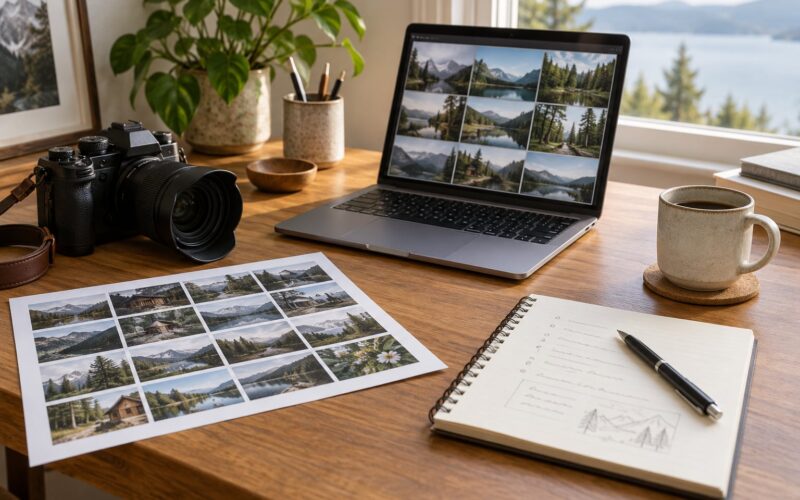
The gear list is shorter than most people expect. A phone camera handles a 365 project perfectly well, and plenty of photographers finish their year shooting only on a phone. If you own a camera with a lens you enjoy, use it. If the camera lives in a drawer and the phone is already in your hand, the phone wins.
Beyond the camera, you need three things:
- Storage. Enough room for 365 originals plus working files. If your phone fills up in January, the project ends in February.
- A naming or tracking system. Something that puts each photo in date order automatically. Naming them yourself by hand sounds noble and lasts about eleven days.
- A backup location separate from your camera or phone. Not a folder on the same device. The same device fails, gets dropped, gets stolen.
You also have to make one small decision up front: is this project private or public? Both work. Public projects get you feedback and accountability, private projects remove the performance pressure entirely. Choose based on whether you enjoy sharing, not on what you think you should do.
One more piece of preparation pays off later. Decide what counts as a completed day. Most people settle on one keeper frame, taken on that calendar day, saved before bedtime. Write that rule down. Projects without a clear finish line drift.
Step-by-Step: How to Start a 365 Photo Project
1. Choose a theme that fits your life
Start broad rather than clever. “One subject a day for a year” sounds enormous until you narrow it to something you actually see most days. Strong beginner themes include the four seasons, your neighborhood on foot, details of your home, what you eat, the people you love, and the ordinary routines you repeat without noticing.
Test the theme before committing. Spend three days shooting it and ask whether you looked forward to those shots or resented them. If resentment shows up on day two, the theme is too narrow or too public-facing. Widen it.
Remember the season idea is a cheat code. Twelve months of similar subjects, repeated under changing light and weather, gives you more variety than three hundred unrelated ideas ever will, and it stays interesting because the ground keeps shifting under it.
2. Set up a simple daily capture routine
Pick a recurring time and attach the camera to something you already do. First coffee, the walk to work, the moment the kids come home. A habit bolted onto an existing habit survives better than a habit that needs its own space in the day.
Then reduce friction. If you use a camera, keep it charged, with the card formatted and the date set correctly. If you use a phone, clear camera roll space before Day 1 and disable auto-delete for the year if your settings offer it.
Set one reminder, not three. A single daily notification that says “one photo” is enough. Over-reminding turns a creative habit into a nagging chore.
3. Use a theme-and-variation system
Repetition is the enemy here. The fix is to assign each month a loose theme and each week a prompt inside it, then vary how you shoot. Same subject, four different approaches: wide, then close; from above, then from ground level; in flat midday light, then at dusk.
Weekly prompt structures are reported as more sustainable than rigid daily prompts, because a weekly prompt absorbs the days when nothing much happens. If Tuesday is unremarkable, you have not broken the rules. You have shot the weekly theme on an ordinary day.
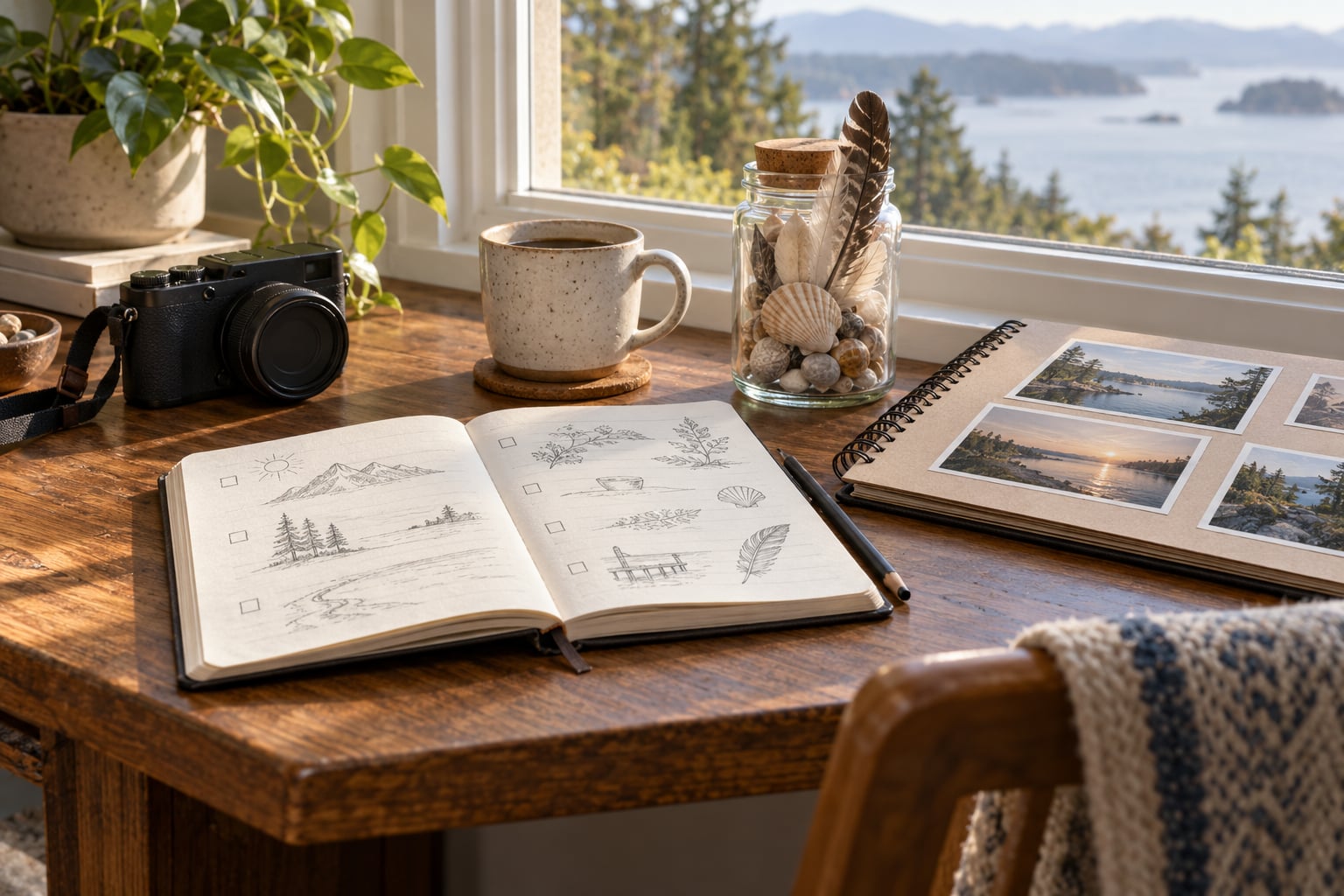
Keep a props box too. A jar of shells, a few feathers, some interesting glass, a worn notebook. People who finish these projects tend to have one, and they reach for it on the weeks when nothing outside is worth photographing.
4. Track progress without creating pressure
Keep tracking simple: a spreadsheet, a notes file, or a photo app that sorts by date. Once a week, maybe Sunday evening, look at where you stand. Ten minutes is plenty.
Then handle missed days deliberately, because this is the question everybody asks and almost nobody answers cleanly. My rule: do not catch up, just continue. Photographing three extra frames on Sunday to cover Thursday and Friday produces worse photos and teaches you nothing. Your archive becomes a record of what actually happened, which is the entire value.
If you fall ten days behind, the honest move is to restart your count from today and keep the earlier photos as a separate archive. Nobody checking your project counts your gaps, and nobody editing their own archive at the end misses a week either.
Accountability helps more than motivation. A partner who asks to see the day’s photo, or a public feed where showing up is visible to strangers, is the most commonly credited reason people finish. Private projects need a substitute, so ask one person to check in weekly instead.
Accept that motivation collapses somewhere around month three. Everyone’s does. Plan for it rather than treating it as failure: build a default prompt you can shoot on your worst days, and the day you use it is a day you kept the streak alive.
5. Review, edit, and protect the archive
Do a weekly check-in, not a daily edit. Selecting and adjusting every image the night you shoot it is how projects die. Batch the work once a week, spend twenty minutes, and move on.
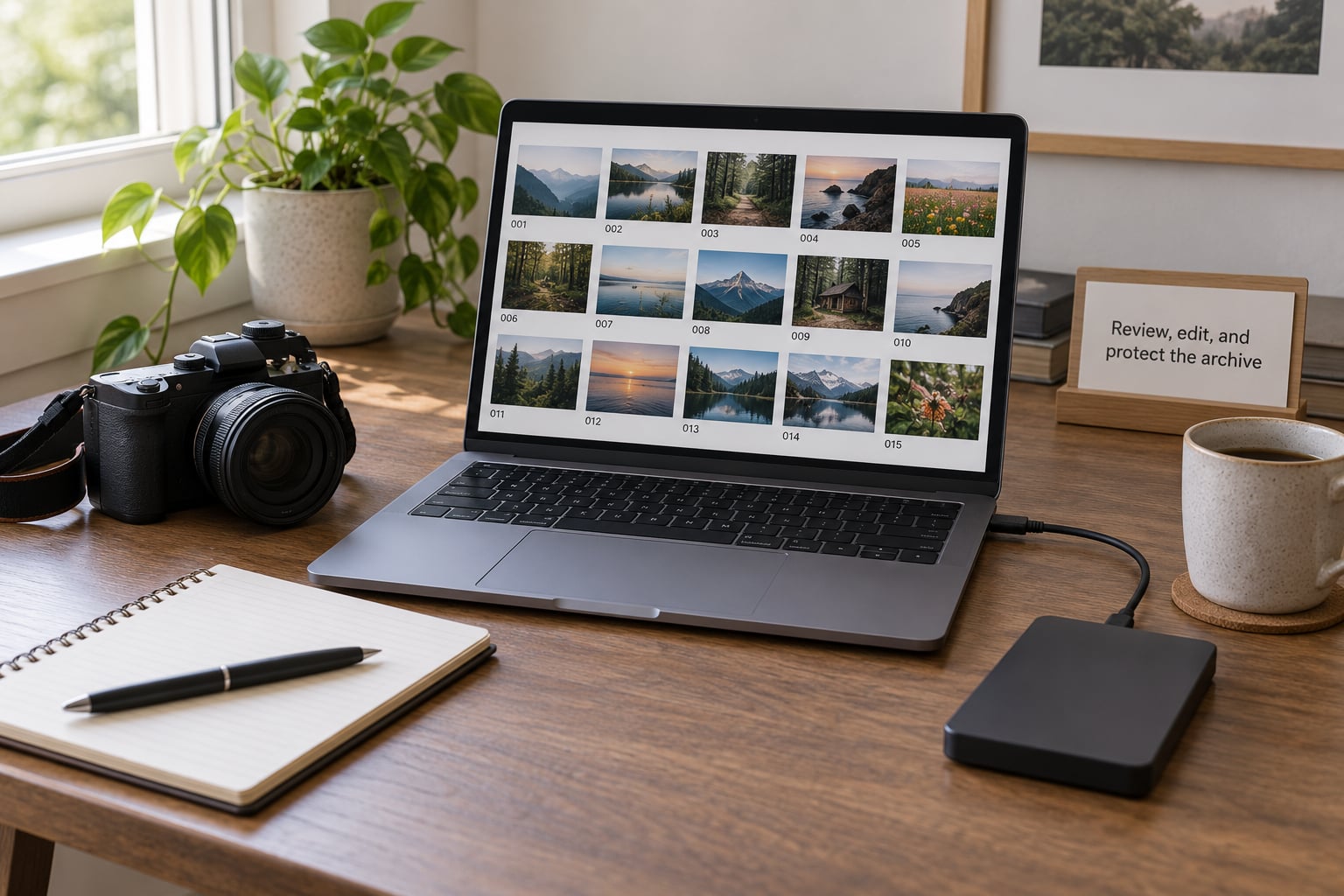
When you do review, keep your adjustments basic. Exposure, contrast, a crop, maybe a white balance correction. If a frame needs heavy work to look good, it was probably the wrong frame, and the next one will be easier.
Sort into three piles: keepers, near misses, and the rest. The rest is not deleted, just out of the way. Many people discover in month nine that their “filler” frames are the ones they like best, because filler frames are the ones nobody posed.
Back up in at least two places, and check occasionally that both are actually receiving files. Keep your edited keepers separate from the untouched daily series. Both archives are worth having a year later, and mixing them makes the daily series impossible to hand to anyone.
If other people appear in your frames, agree on boundaries early. Ask before you photograph someone’s face, agree on what stays private, and keep a few no-photo days in the calendar. Projects that involve family members end faster than any other kind when consent is assumed instead of asked for.
6. Finish with a meaningful photo set
Day 365 is not the finish line. The project is finished when you have a set of images worth keeping, and most people who complete this narrow their 365 frames down to somewhere between twenty and fifty.
Review the whole year looking for recurring visual stories, not single favorites. You will likely find three or four threads: one street, one person, one season, one habit. A set of twenty frames with a thread through them reads far stronger than thirty scattered keepers.
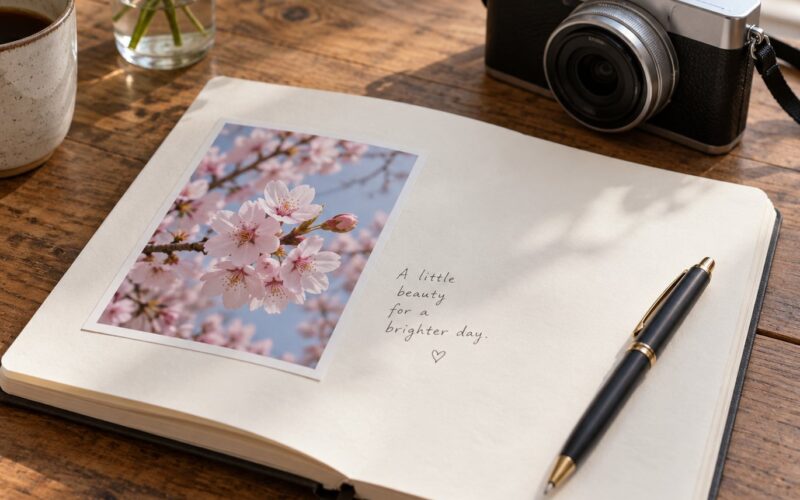
Decide how you want the year to exist afterward. Print a small photo book, make a slideshow for family, post a monthly recap, or just leave the archive filed and searchable. There is no wrong ending, and most people who skip this step are the ones who feel disappointed a year later, because 365 frames sitting in a folder is a habit with no visible result.
Getting comfortable in the frame
Put yourself in some of the photos. Self-portraits are the most commonly reported confidence boost from a year of daily shooting, and they solve the problem of people who are always behind the camera.
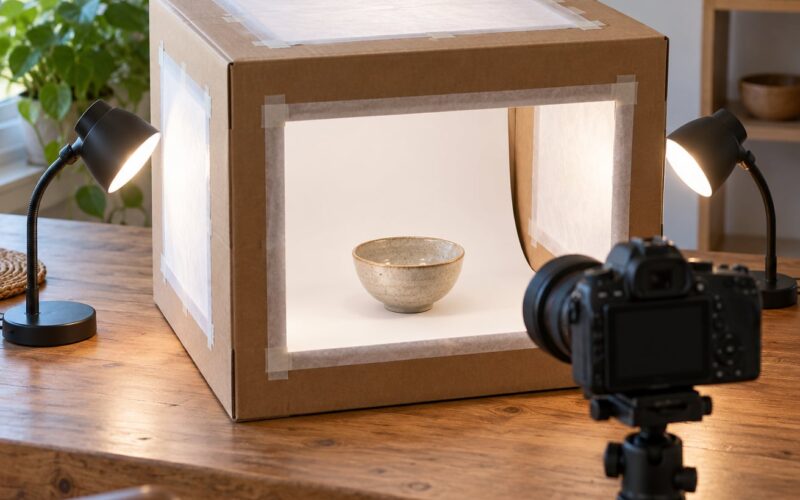
Start easy. A shadow on a wall, hands in frame, a reflection in a shop window, a silhouette against a window at dusk. Once you are comfortable, set the camera on a surface, use a timer, and shoot ten frames to get one that works.
Common Mistakes to Avoid in a 365 Photo Project
Waiting for good light. Waiting for perfect conditions means shooting three days a week. Shoot in the light you have; flat midday light is training, and it teaches you more than a single perfect golden hour.
Changing the concept every week. Abandoning a theme in week three means starting over in week four, which is why people who never settle into one theme rarely get past two months. Pick something with room in it and stay in it for a full season.
Treating every frame as a masterpiece. One keeper per day is the standard, and that keeper does not have to be good. Judging yourself daily turns a habit into a grade you can fail.
Posting everything publicly. The moment an image becomes content, you start shooting for the feed instead of for yourself, and the pictures get flatter. If you share, set a weekly share day rather than posting daily.
Keeping one storage location. Two copies, one of them off the device that took the pictures. This is the cheapest insurance in photography.
Filling gaps on purpose. Shooting a bad frame just to protect a number is where the project turns into filler. A short archive of honest frames is worth more than a complete one of obligations.
A few smaller habits help too. Put the camera where you can grab it without thinking. Write your finish rule down where you will see it. And decide in advance what happens when you travel, because it will, and the answer is one frame a day from a window rather than a skipped month.
Frequently Asked Questions
Do I need a professional camera to start a 365 photo project?
No. A phone is genuinely enough, and many people complete a full year on one. What matters most is that the camera is where you can grab it without effort, because a camera in a drawer produces zero photos. If you own a camera you enjoy using, bring it along for the frames you care about. Switching between devices often creates sorting problems, so pick one and commit to it for the year.
What should I do if I miss a day during a 365 photo project?
Do not catch up. Photographing extra frames to fill gaps produces worse images and turns the archive into a lie about what your year looked like. Simply continue, and keep a running note of the dates you missed so your final count is accurate. If a hard month knocks you off by a week or more, restart your count from that day and archive the earlier photos separately.
Can I use my phone instead of a camera?
Yes, and you probably should if that is what you carry every day. Phones handle low light, depth and colour well enough that the gap is far smaller than beginners expect. Turn off the automatic HDR stacking if you want predictable files, check the date stamp is right before Day 1, and clear enough storage for 365 originals. Treat the phone exactly as you would treat a camera body.
How much time does a daily photo project take each day?
Ten to twenty minutes on a normal day: a few minutes to notice and shoot the frame, a few minutes to save it and add a note about why you took it. The weekly review adds another twenty minutes, so budget roughly two hours a week in total. The biggest time cost is not shooting, it is scrolling back through your archive looking for something to post. Keep that optional.
Should I edit every photo in a 365 photo project?
Keep your adjustments basic and batch the work weekly rather than nightly. Exposure, contrast, a crop and a white balance correction are enough for most frames. Avoid heavy retouching, since a frame that needs hours of work was usually the wrong choice on the day. Sorting into keepers, near misses and the rest keeps the archive usable without turning the project into a full-time editing commitment.
What can I do with my photos after finishing 365 days?
Narrow the year down to twenty to fifty frames and look for three or four recurring threads, such as one street, one person or one season. Those threads become a small photo book, a slideshow or an album you can share. Keep the full daily series archived and searchable, because frames that seem forgettable in December often turn out to be the ones people ask about years later.
Conclusion
Start tonight, not on the first of the year. Pick one broad theme, charge the camera you actually carry, set a daily reminder, and shoot one frame before you go to bed. Put a second backup in place the same evening.
That is the whole project. The habit is the point, and everything else comes out of the archive at the end.